
Back Pain: When Should You Actually See a Physio?


Back pain is incredibly common. Most of us will experience it at some point in our lives, and for many people an episode of back pain will gradually improve with time, movement and a return to normal activity.
But when your back hurts, it isn’t always easy to know what to do.
Should you rest? Keep moving? See your GP? Book a physio? Do you need an MRI? And how do you know whether your pain is something you can manage yourself or something that needs properly assessing?
At Dorset Physio, we see people at every stage — from a first episode of back pain to problems that have been recurring for years.
Here’s our guide to knowing when it might be time to get some help.
Most Back Pain Isn’t Dangerous
Back pain can be surprisingly painful without there being serious damage to your spine.
Pain can also make us understandably cautious. You might stop exercising, avoid bending or lifting, or become worried that normal movement is making the problem worse.
For many straightforward episodes of back pain, keeping gently active and continuing your usual activities as much as you comfortably can is a sensible place to start.
Complete rest is rarely the answer. Your back is a strong, adaptable structure designed to bend, twist, lift and move.
So When Should You See a Physio?
There isn’t a magic number of days you should wait.
You don’t have to wait until you’ve been in pain for six weeks — and equally, you don’t necessarily need treatment the moment your back feels sore.
It may be worth having a physiotherapy assessment if your back pain:
is stopping you doing your normal activities
is interfering with work or sleep
is preventing you exercising or playing sport
isn’t improving as you would expect
repeatedly settles and then comes back
is accompanied by leg pain, altered sensation or weakness
has made you frightened or uncertain about moving
is simply worrying you and you’d like to understand what’s happening
Sometimes one of the most useful things we can provide is reassurance and a clear plan.
What Does a Physio Actually Assess?
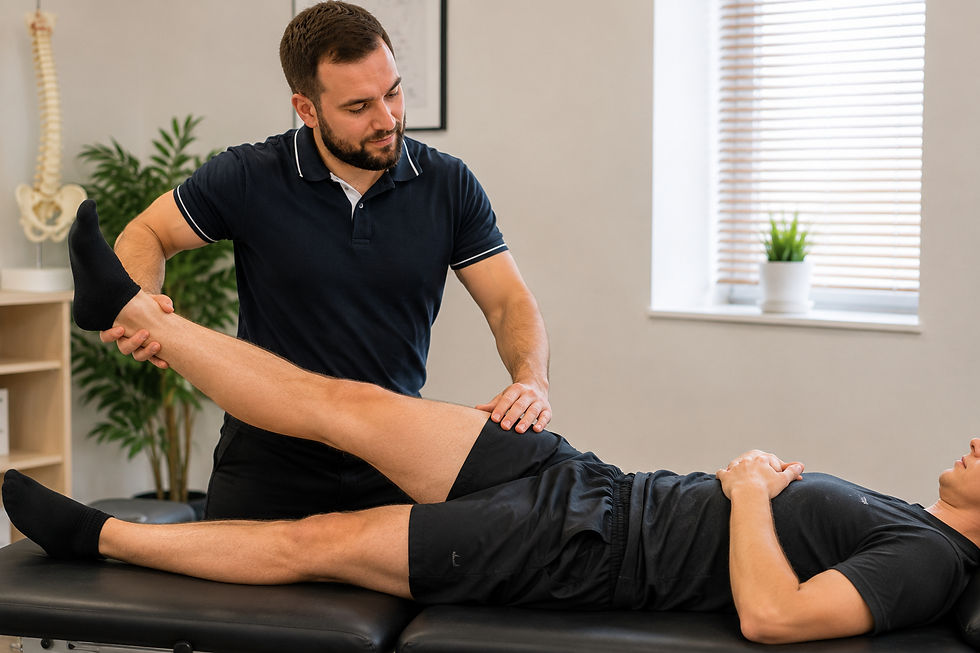
A good physiotherapy assessment is much more than being handed a sheet of exercises.
We’ll start by listening.
When did your symptoms begin? Where do you feel them? What makes them better or worse? What activities are difficult? Have you had this problem before?
Just as importantly, we’ll want to know what you need your back to do.
The physical demands on someone who works at a desk are very different from those of a builder, runner, gardener, parent lifting a toddler or someone trying to return to the gym.
We can then examine things such as your movement, strength, neurological function and the way your symptoms respond to different movements or loads.
The aim is to build a clinical picture of what may be contributing to your problem and, importantly, what we can do about it.
Do I Need an X-Ray or MRI?
Usually, no.
Scans can be extremely useful when there is a clinical reason for having one, but most episodes of back pain do not routinely require imaging.
One reason is that scans commonly show changes in the spine in people who don’t have any pain at all. Finding a disc bulge, degeneration or other age-related change on a scan doesn’t automatically tell us what is causing someone’s symptoms.
That’s why your history and clinical examination matter.
If your assessment suggests that imaging or further medical investigation is appropriate, your physiotherapist can discuss the next steps with you.
What About Treatment?
There isn’t one treatment that works for every person with back pain.
And there shouldn’t be.
Treatment should be based on the individual in front of us, the findings from their assessment and what they need to get back to doing.
Depending on the problem, physiotherapy may include:
hands-on treatment
advice and education
exercises specific to your presentation
strength and conditioning
movement or mobility work
modifying activity temporarily
gradually rebuilding tolerance to lifting, work or sport
helping you return confidently to normal life
For some people, treatment initially focuses on settling a very painful episode.
For others, particularly when pain keeps returning, the bigger question is why their back is repeatedly struggling with the demands being placed upon it.
That’s where rehabilitation becomes particularly important.
Can I Exercise With Back Pain?
Often, yes.
Pain does not automatically mean that movement is harmful or that you are damaging your spine.
That doesn’t mean you should simply ignore severe pain and push through everything either.
The useful middle ground is working out what you can currently tolerate, what may need modifying temporarily and how we can progressively build your capacity back up.
If you’re a runner, we want you running again.
If you love the gym, we want you lifting again.
If your goal is walking the coast path, gardening, working comfortably or picking up your grandchildren, that’s what your rehabilitation should be working towards.
The goal isn’t to make you dependent on physiotherapy.
It’s to help you get your life back.
When Back Pain Needs Urgent Medical Attention
There are some situations where back pain should not wait for a routine physiotherapy appointment.
Seek urgent medical assessment if you develop symptoms such as:
new difficulty controlling your bladder or bowels
numbness or altered sensation around your genitals, buttocks or saddle area
rapidly developing or worsening weakness in your legs
severe back pain accompanied by significant unexplained illness or feeling seriously unwell
These symptoms are uncommon, but they are important and require appropriate medical assessment.
Not sure when back pain needs urgent attention?
Watch this short MACP video explaining the symptoms you shouldn’t ignore and when to seek urgent medical help.
Your Back Is Made to Move

Back pain can be frightening, particularly when it arrives suddenly or stops you doing something that’s important to you.
But having back pain doesn’t automatically mean you have a damaged or fragile spine.
Sometimes it simply needs time and sensible movement.
Sometimes it needs treatment.
Sometimes it needs a proper rehabilitation programme to rebuild strength and capacity.
And sometimes you just need someone experienced to assess you, explain what’s happening and help you work out what to do next.
At Dorset Physio, that’s exactly where we start: with you, your symptoms, your goals and a thorough clinical assessment.

Our aim isn’t simply to reduce your pain.
It’s to help you move well, rebuild confidence and get back to doing the things that matter to you.
Dorset Physio
Longevity • Performance


Comments